
Credibility, trust and influence
As an HR leader, you can tell when business leaders find you credible and trustworthy. They listen to you, invite your input before they’ve made key decisions, and act on your advice. Most decisions aren’t actually made in meetings – leaders’ minds are often made up before that. That’s why you need a conscious strategy to ensure that your insight is seen as relevant to the challenges the business leader has to solve.
When you’re partnering strategically in HR, you need to be in the room when leaders are thinking.
In this article, we’ll explore how to get to that point – where HR are able to contribute not only to current performance, but also to help the CEO and the leadership team to explore uncertainty, shape future direction, mobilise transformation and build the organisational capabilities required for what comes next.
In reality, in which of these zones do you spend most of your time?
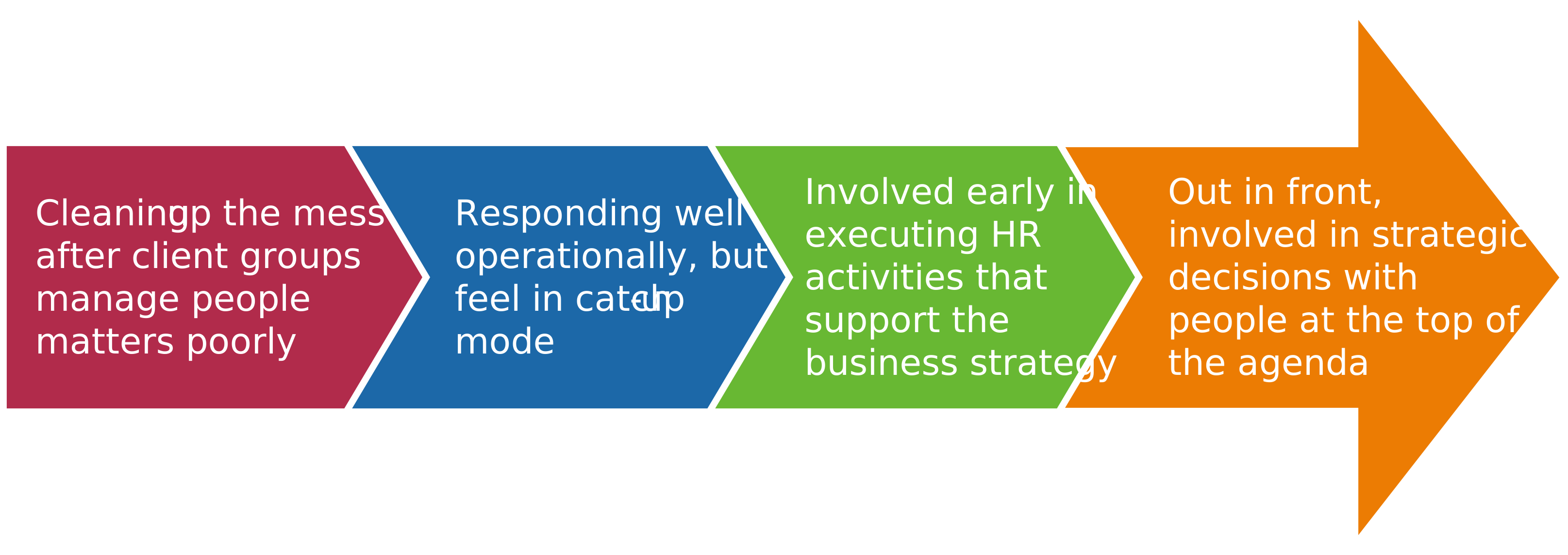
Unless you’re in the orange zone, there’s a cost – for HR and for the business. You’ve probably reached that stage with some stakeholders, and find others more difficult.
Many leaders just want HR to solve their problems for them.
For a busy business leader, it seems like an easy solution to hand over a performance issue or ask HR to find a replacement for someone who has left. In HR we know that this is usually a short-term fix, when what organisations really need is to build strong and effective foundations that enable leaders to deal confidently with people issues themselves.
Building leadership maturity is a core challenge for HR at the strategic and organisational level, and we’ll come back to that in a future article. Right now, we’re looking at the relationship level.
Let’s look closer at credibility – it’s a primary ingredient in trust
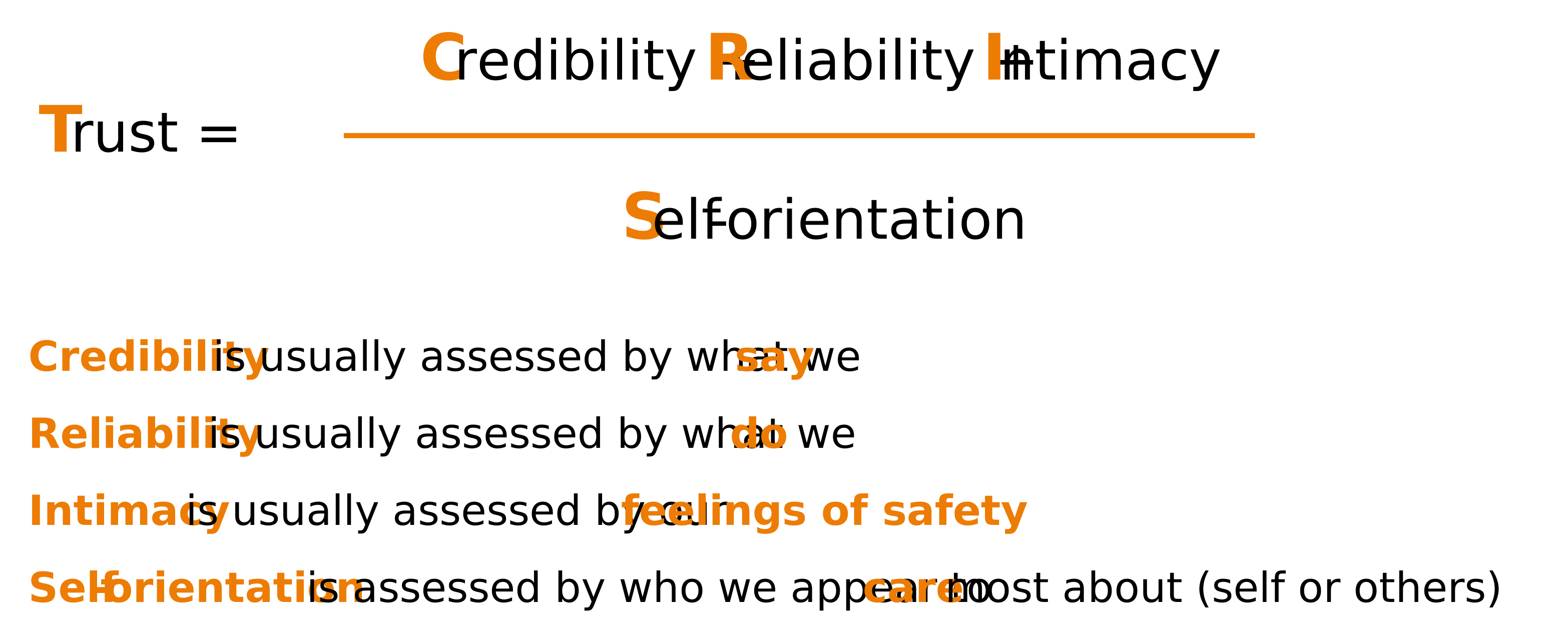
How do you decide whether you trust someone? David Maister’s Trust Formula is helpful in breaking down the elements within trust:
To be credible as an HR leader today, it’s vital to demonstrate that your head is in the business world, not HR. You achieve that by using business language, not HR jargon; by showing that you understand the business model and what drives success, and by articulating current business challenges clearly.
It’s vital that HR is seen to do what the business actually needs, not what HR thinks it needs.
To achieve that, HR has to invest time in learning about what matters most to business leaders. Making the effort to explore the world your stakeholder lives in has two rewards. First, you deepen your understanding of their area of the business. Second, your generous curiosity builds the relationship and opens the door to your ability to influence.
Contact me to access our Business Acumen Quiz.
Trust is built on building your understanding of – and respecting – the pressures on others
The point Maister is making by putting ‘Self-orientation’ below the line is that trust is undermined when HR forces their own agenda. No matter how much credibility HR has built up, it’s completely lost when, e.g. an intervention is rolled out when there’s peak operational pressure, or when a process appears over-complicated to serve HR’s purposes.
Let’s take performance management. It’s obvious to HR leaders why that’s good practice and also good leadership. Business leaders don’t automatically understand how it drives business results – they can regard it as an HR process rather than a business process, and therefore not relevant to their goals.
Most business leaders don’t understand how HR can drive business outcomes.
In a conversation with a CEO recently, I asked him ‘Do you understand how great HR can drive growth?’ ‘No’, he said, ‘I’ve never heard that before.’ Part of the answer, in his business context, was jumping on performance and absence issues quickly, and also what he called ‘bench strength’. As you’ll know, both are built upon good performance management capabilities – but HR has to explain how. Once the CEO understood that connection, he recognised the value that stronger HR business partnering could bring, and a truly positive result of that conversation was that the CEO approved more HRBPs.
If business leaders have never experienced genuinely great HR, we cannot expect them to understand what it looks like or the difference it can make. Therefore, we have to explain it and illustrate exactly how better performance conversations strengthen accountability and capability, leading to improved business outcomes.
This demands clear business relevance – not the rather generic phrases that HR can tend towards, but precise examples that link HR’s work to business outcomes in that unique organisation. This in turn builds the kind of trust that makes genuine partnership possible. When HR combines credibility with a genuine orientation towards the success of the business leader and their part of the business, trust deepens. This requires listening, candour, reliability and an ego-less approach.
HR earns credibility by connecting its contribution to what genuinely matters to the business.
This is how HR builds a strong platform from which it can influence effectively, and bring its expertise and perspective to the decisions that will shape the future of the business.

Practical ways HR Leaders earn a seat at the table
Our Seven HR Enablers provide a useful framework for drawing out some of the practices that distinguish HR leaders who are genuinely trusted advisors:
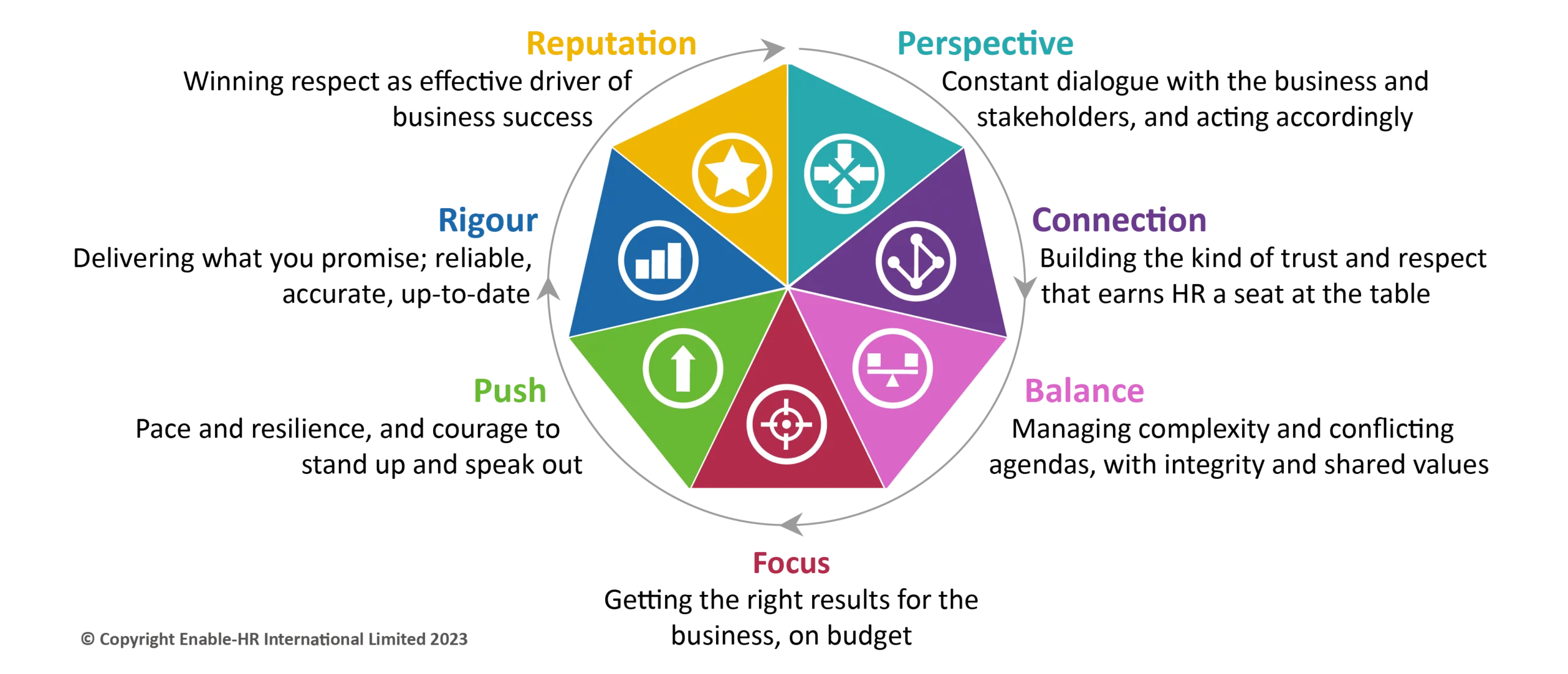
1. Perspective – build visibility of the complete picture, not just the people aspects of it
Develop real fluency in the business, not just HR’s corner of it, so that you understand the numbers, current pressures and competitive picture well enough to discuss them confidently. Regularise questions into business relationships to ensure that you’re always up to date.
2. Connection – nurture your relationships deliberately
Identify the three or four stakeholders whose confidence and trust genuinely matter to what you’re trying to achieve, and invest in those relationships specifically rather than everyone who asks for time. Be as careful with your time as you are with your money.
3. Balance – explain the dilemma, don’t just promote HR’s agenda
Leaders are more likely to trust advisors who show they understand the conflicting interests. When you advise on a decision, be clear about what it costs the business as well as the risks and benefits for people, even when that conversation is uncomfortable from an HR perspective.
4. Focus – identify where HR’s work drives value
Credibility comes from providing a sound business argument for HR’s activities, and delivering the impact that you promise. Make sure you understand the root causes for issues, and bring your business case to life with examples of the impact on the customer experience or business outcomes.
5. Push – bring a clear point of view, backed up with powerful data
Business leaders respect people who are prepared to commit to a position and defend it with conviction and sound data. Take every opportunity to repeat and reinforce examples of how HR adds value informally in routine conversations as well as in formal presentations.
6. Rigour – define success in the business’s own terms before you start
Agree up front what success will look like, using the language and measures the business already understands, such as retention in a critical role, time to productivity or delivery of a change milestone, rather than relying primarily on HR process measures that lack relevance in business leaders’ minds.
7. Reputation – advocate for HR’s work, don’t leave your reputation to chance
Build a habit of talking about, in business terms, what HR’s involvement actually changed. Develop a clear message – a strategic narrative, or an operational story – that makes the business outcome clear. Across the function, give your HR team the words to use and get them used to talking about their success – it’s infectious!
Build credibility, influence and impact in your team
Register for our upcoming webinar: How brilliant HR leaders can get the role they deserve in enterprise transformation taking place on Wednesday 23rd September 2026. A thought-provoking webinar for HR leaders who want to influence when it matters. Rupert Brown, People Change Consultant and author, will share his experience and research about HR leaders’ blind spots and how to own the conversation about change. If you’d like to play a more powerful part in the theatre of transformation, this is for you.
Our Enable-HR Profiling System provides a clear evaluation of where you and/or your HR team currently stand against these seven Enablers – Self, Team and 360. Contact me to try it out with a complimentary Profile
Our Developing Valued HR Leaders programme will identify and close the gaps in the leadership capabilities that matter most in your particular context.
Our One HR Team programmes involve your HR leaders in building clarity about how to drive value in your organisation, and moving forward together.
To go into more depth in influencing, see our Strategic Influencing Skills programme.
Get in touch to book a no obligation conversation with us to talk about any of this article in further detail.
Explore more
Reboot your HR Business Partnering with the Seven HR Enablers
How brilliant HR leaders can get the role they deserve in enterprise transformation


